
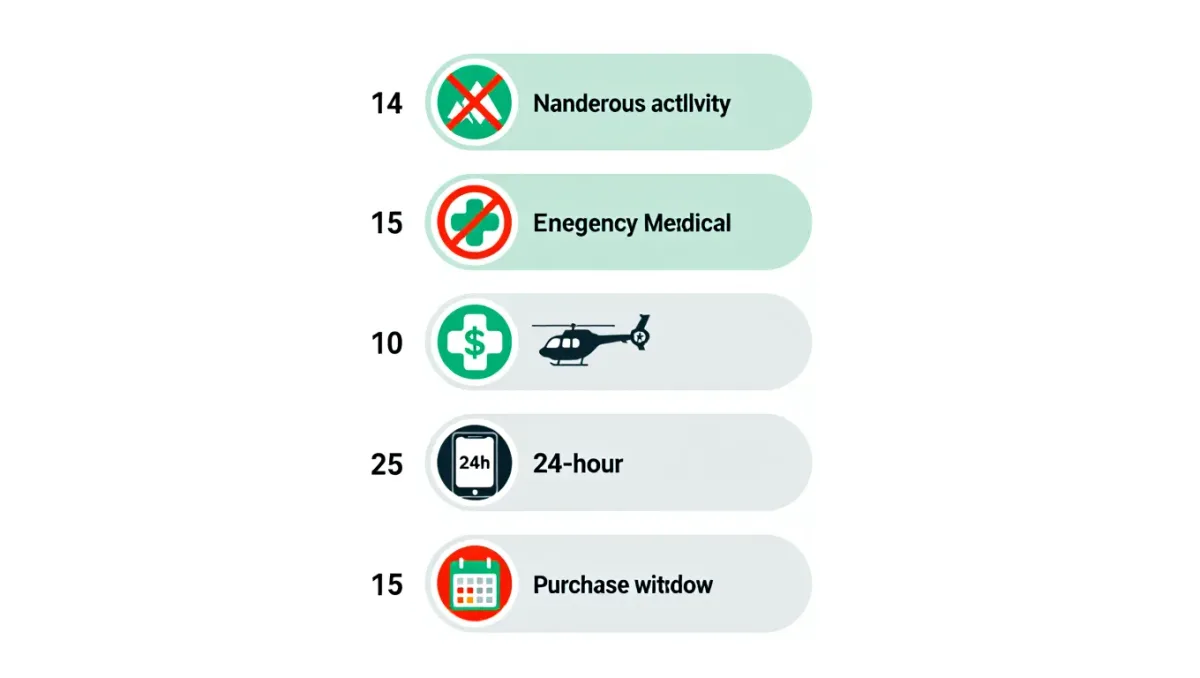
The single fact that decides adventure-trip insurance is exclusion wording: most standard travel policies cap or exclude activities they classify as hazardous — commonly including mountaineering above certain heights, off-piste skiing, whitewater above a specified class, and technical climbing — so a policy bought for a beach week can silently fail on a backcountry trip. The checklist below is how you find out before you need the coverage, not after a helicopter ride you assumed someone else was paying for.
This guide publishes information, not insurance, medical, or legal advice: policies differ by insurer, state, and country, and the wording of your specific contract controls. Read the actual policy document and confirm anything unclear directly with the insurer in writing before purchase.
Does the policy cover your specific activities?
Start at the exclusions, not the marketing page. Find the hazardous-activities or adventure-activities clause and match it line by line against your itinerary: the altitude ceiling for mountaineering or trekking coverage (many policies draw lines at fixed elevations), the whitewater class limit, guided-versus-unguided distinctions, and whether glacier travel, via ferrata, canyoning, or backcountry skiing appear at all. If your activity is not listed as covered, it is excluded — insurers sell activity riders and adventure-specific policies for exactly this gap. Get the confirmation in writing; a phone representative's yes that is not in the contract is not coverage.
What does emergency medical coverage need to include?
Two numbers and one mechanism. First, an emergency medical limit high enough for a serious incident abroad — treatment plus hospitalization in remote regions can run well into six figures, which is why experienced travelers commonly look for six-figure medical limits. Second, medical evacuation coverage separate from the medical limit, because a helicopter long-line rescue or a fixed-wing medical flight is billed separately from the hospital and can alone exceed $100,000. The mechanism: a 24-hour assistance line that coordinates and guarantees payment to providers — without it, you can find yourself paying up front and hoping for reimbursement. The US State Department's guidance for international travelers makes the same core point: verify that your policy covers medical care and evacuation where you are going.
Related stories: The Week-Before Checklist: Seven Days Out to Trailhead · How to Plan a Hiking Trip Abroad: Documents, Permits, and Logistics.
What trip-level coverage should you check?
The non-medical half of the policy, matched to money you would actually lose. Trip cancellation and interruption limits should cover your prepaid, non-refundable costs — permits, lodges, guides, flights. Baggage and gear coverage deserves special attention on outdoor trips: check the per-item cap, because a single limit often applies to electronics or to categories like cameras, and expensive personal gear may exceed it. Note what triggers coverage — illness, injury, and named perils — since wanting to cancel because the weather looks bad is not a covered reason under most standard policies.
When should you buy the policy?
Buy early enough to matter, usually within days of your first trip payment. Two reasons: some benefits — including coverage windows for cancellation due to certain unforeseen events — are tied to purchasing within a set window after the initial deposit, and the whole point of cancellation coverage is protecting deposits you have already made. For permit-driven trips where lottery results and refund rules are tight, buying when you commit to the trip rather than the week before departure is the sequencing that works.
What should you do with the policy before departure?
Three habits: save the insurer's 24-hour assistance number offline, on paper and phone; carry proof of coverage and the policy number where emergency responders or a hospital can find it; and read the claims procedure before the trip, since most disputes come from documentation — receipts, incident reports, physician notes — that is easy to collect on the spot and hard to reconstruct later. Note also what your regular health insurance already does abroad; for many travelers it does little, which is the reason the travel policy exists.
What is the five-minute version of the checklist?
Match your activities against the exclusions in the actual policy text. Confirm a six-figure medical limit plus separate evacuation coverage plus a 24-hour assistance line. Match cancellation limits to your prepaid costs and check the gear per-item cap. Buy within the window after your first deposit. Carry the assistance number offline. Rules and products change — verify current policy wording with the insurer before you buy, and let the checklist, not the brochure, make the decision.