
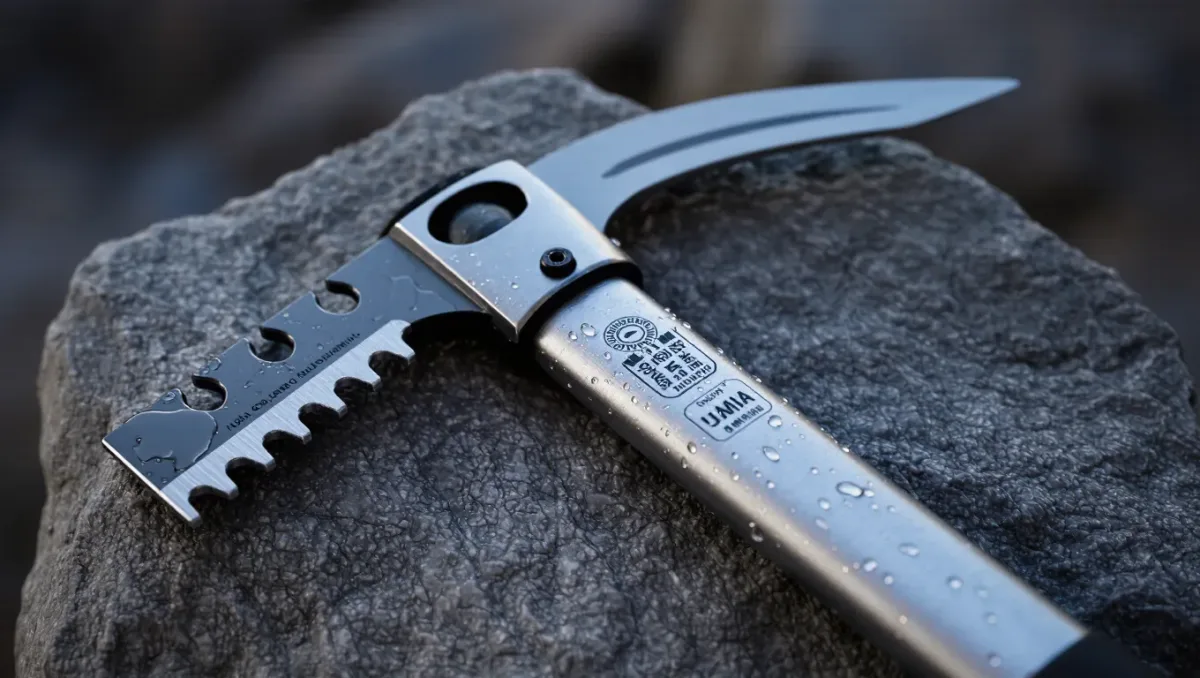
Choosing an ice axe comes down to three decisions: the terrain you will travel on, the axe's length in the 50-75 centimeter range most manufacturers offer, and whether the head is built for classic mountaineering or steeper technical ground. A classic straight-shafted piolet sized from about 55 to 70 cm covers snow climbing, glacier travel, and self-arrest for most hikers, per current spec sheets from the major makers such as Petzl and Black Diamond. Everything else — curved shafts, hammer heads, sub-50 cm tools — serves grades of climbing most first-time buyers have not yet reached.
This guide reads the manufacturer documents so you do not have to guess: what each design feature does, how certification is labeled, and where the marketing ends and the spec sheet starts. It publishes information, not climbing instruction — an axe only does its job in trained hands, and any avalanche-area trip also requires the forecast and companion-rescue skills taught in an avalanche course.
What will you actually use the axe for?
Answer that first, because it drives every other choice. If the use case is snow travel on approaches, spring climbing on walk-ups, and self-arrest practice, you want a classic piolet: a relatively straight or gently curved shaft, a steel pick and adze, and length long enough to plant comfortably while moving. If the use case is climbing steeper snow and ice where the axe is used more like a tool than a cane, manufacturers build shorter axes with curved shafts and more aggressive picks. Buying a technical tool for walking terrain buys you an awkward cane and a sore wrist; buying a long classic axe for steep water ice buys you a pick that will not reach the swing you need.
How long should the axe be?
The classic fitting method most manufacturer sizing guidance describes: hold the axe by its head with the spike at the floor. In a classic piolet, the spike should reach the ground when your arm hangs relaxed — which puts most adults at 55 to 70 cm for walking and general mountaineering. Sizing down roughly 10 cm is a common choice for climbers who expect steeper ground and more swinging; sizing up adds reach on gentle slopes but drags on every swing. Technical tools from major makers run far shorter — roughly 45 to 60 cm — because their length is calibrated to swings, not to cane use. Treat printed size charts as the reference and try before you buy where you can.
| Design | Typical length | Built for | Examples in class |
|---|---|---|---|
| Classic piolet | 55-75 cm | Snow travel, glacier, self-arrest | Black Diamond Raven, Petzl Glacier |
| Hybrid mountaineering | 50-60 cm | Steeper snow, mixed ridge travel | Black Diamond Alpine Raven series, Petzl Summit Evo |
| Technical tool | 45-55 cm | Steep ice, ice climbing leads | Black Diamond Venom, Petzl Nomic class tools |
| Ultralight/aluminum-head | 50-70 cm | Ski touring, emergency traction | Petzl Glacier, aluminum-head touring axes |
Which features actually matter on the spec sheet?
Head material first. Steel heads hold a sharpened pick better and bite harder in alpine ice; aluminum heads save significant weight, which matters on long approaches, but manufacturers themselves note they dull faster and are aimed at snow, not ice. Shaft material is usually aluminum alloy in every class; the shape is what differs — straight or gently curved for classic use, strongly curved for technical tools so knuckles clear rock and the pick swings naturally. The pick's profile matters for self-arrest: most modern picks curve downward to bite when you press the shaft across your shoulders, which is the arrest position a course will teach. Adze versus hammer: choose an adze for chopping steps and benches on mountaineering routes; hammers belong on tools for routes with protection placement.
Weight is the honest differentiator on long days: spec sheets for classic aluminum-head touring axes run well under a pound, steel-head classics sit near one pound or slightly above, and technical tools climb past that. Grips, spike design, and accessory leash options round out the list — and leashes deserve their own question.
Related stories: How to Choose a Climbing Harness: Fit, Type, and Certification · What to Know Before You Hike to The Wave in Coyote Buttes North.
Do you need a leash on an ice axe?
Modern practice has moved away from wrist leashes for most general mountaineering: manufacturers now market most classic axes without them, and guidebook and course providers commonly argue a leash can complicate self-arrest and self-belay transitions. A leash still earns its place on long, steep, committed ground where dropping the tool means losing it, or on glacier travel where a dropped axe is a safety problem. If you carry one, practice with it attached; an unused leash is a tangle waiting to happen.
What does the certification label mean?
Look for EN 13089 / UIAA 153 marking on the shaft or head — the European and international standards for mountaineering ice axes, which cover strength and construction classes (Type B for classic piolets, Type T for technical). Manufacturers print the class in their spec sheets, and reputable retailers list it. An axe without the marking is a novelty product, not mountaineering equipment, whatever the packaging suggests. Also check the rated maximum: axes are not climbing anchors, and the standards are about their intended loads in arrest and plunge, not top-rope belays off a planted shaft.
Whatever you buy, budget for instruction: a self-arrest you have never practiced is not a safety feature. Conditions change on alpine routes — check the avalanche forecast and route conditions with the managing agency before you go.
The buying decision in five steps
- Write down the steepest terrain you realistically plan to travel — not the aspirational one.
- Classic snow and glacier terrain: pick a classic piolet, 55-70 cm, steel head if weight allows, aluminum if the approach is long.
- Steeper snow ridges and mixed ground: hybrid axes around 50-60 cm with a moderate curve.
- Water ice and steep alpine lines: technical tools, 45-55 cm, sold in pairs — a different purchase with a different budget.
- Verify the EN 13089 / UIAA 153 marking on the current manufacturer spec sheet, then fit the length in person if at all possible.
Frequently asked questions
Can one ice axe do everything?
A 55-60 cm hybrid can cover most hikers' needs from spring snowfield travel to moderate alpine routes acceptably, which is why it is the common single-axe answer. What it cannot do is climb steep ice well or replace the technical tools that terrain demands, and manufacturers design each class with those limits in mind.
Are aluminum-head axes worth it?
For ski touring, high-mileage approaches, and emergency glacier travel, the weight savings are real and manufacturers position them exactly there. For trips where the axe will work hard on alpine ice, a steel head's durability and bite justify the extra ounces, per the manufacturers' own use guidance.
How do I care for an ice axe?
Keep the pick and adze deburred and lightly filed after rock contact, dry the tool after wet trips, and check the spike and head bolts for wear each season, per general manufacturer care guidance. Store it without edge tape wrapped tight over a wet pick — corrosion under tape is common.