
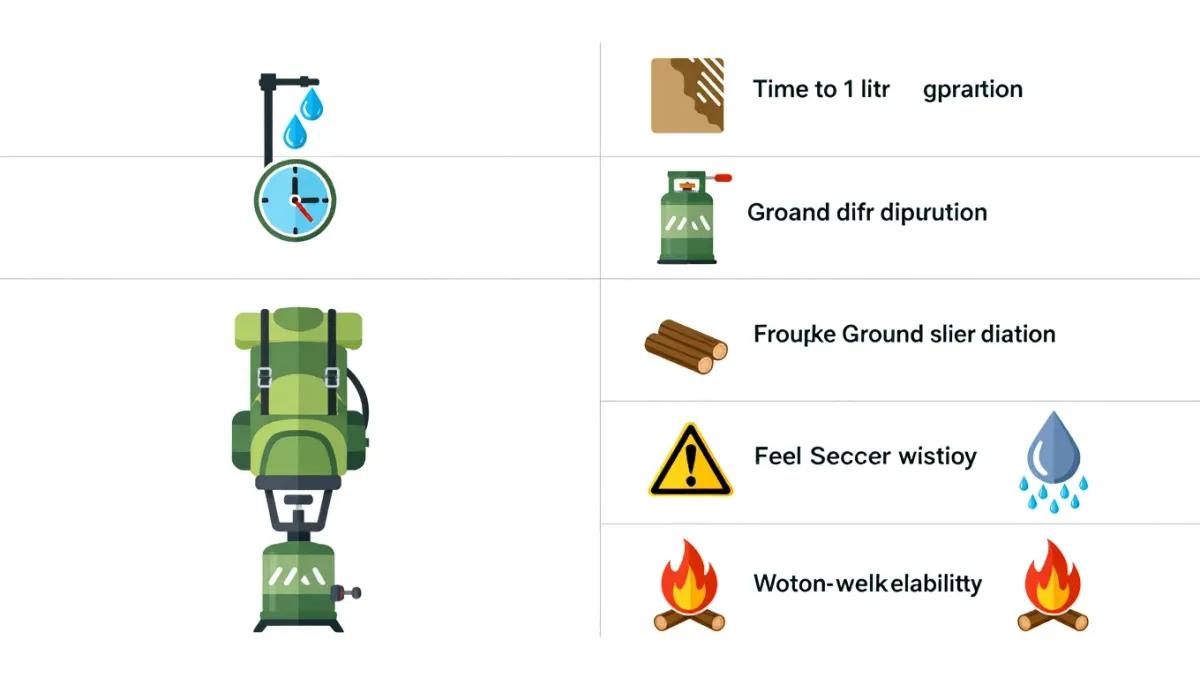
For cooking, a camp stove wins on every measurable axis: a canister or liquid-fuel stove leaves no scar, needs no fuelwood, and brings water to a boil in roughly 3 to 5 minutes, while a campfire consumes deadwood that forest floors depend on, blackens soil and rock in ways that persist for years, and — per federal wildfire investigators — unattended or escaped campfires are among the leading human causes of wildland fire ignitions in the United States. That is why the Leave No Trace guidance on fire is blunt: a lightweight stove is the preferred tool for cooking, and a fire is a low-impact choice only where wood is abundant, regulations allow, and conditions are safe.
This explainer compares the two on impact, regulation, and practicality. Fire rules are set locally and change with the season — fire bans can start weeks earlier in a dry year — so treat this as background and check current restrictions with the managing agency before every trip.
How does a campfire change the ground it sits on?
More than it looks. A wood fire can heat the top layer of mineral soil hot enough to kill the organic matter, seeds, soil microbes, and small organisms living in it; recovery of a badly burned fire site is measured in years to decades, which is why agencies ask campers to use established fire rings rather than making new ones. Rings themselves accumulate charcoal, nails, and foil that persist visually and chemically. Fires directly on rock crack and spall the surface permanently — the black scar on a lakeshore boulder outlives everyone at the party.
Is burning deadwood really a problem?
In wood-poor country, yes. Deadwood is not garbage: it shelters insects and salamanders, slowly releases nutrients, and in arid and alpine zones recycles into soil on decadal timescales, so campfire demand around popular areas strips the forest floor faster than it replaces itself. Leave No Trace guidance is to burn only dead and down wood you can break by hand, wrist-thick or smaller, gathered widely rather than stripped from one spot — and to skip fires entirely in high elevations, deserts, and heavily used corridors where wood is scarce.
Related stories: How to Practice Leave No Trace on Winter Snow Camping Trips · Why Cutting Switchbacks Damages Trails More Than You Think.
What does the regulatory picture look like?
Layered, and stricter than most hikers assume. Many national parks and wilderness areas prohibit open fires above designated elevations or outside established rings; some popular backcountry corridors ban fires outright even in wet forests, and fire pans are required on most multi-day river trips precisely because beach fires were degrading every camp. Regional fire bans — triggered by drought and wind — can prohibit even stoves outside designated sites in extreme conditions. The rule of thumb: assume no fire until you have confirmed otherwise, in writing, with the land manager for your dates.
How do the numbers compare for a typical dinner?
Side by side, the stove dominates:
| Factor | Canister stove | Campfire |
| Time to boil 1 L | ~3-5 minutes (manufacturer rated) | 15-30 minutes, wood-dependent |
| Ground scar | None | Years to decades of soil damage |
| Fuel source | Carried canister or liquid fuel | Local deadwood, habitat loss |
| Fire risk | Minimal, controlled flame | Escaped embers, a leading human ignition source |
| Wet-weather reliability | High | Low — wet wood, no heat |
Stoves are not impact-free — canisters are steel and must be recycled or emptied and packed out, and liquid fuel needs careful handling — but their footprint ends at the canister, not the landscape.
When is a campfire still worth it?
Where it is legal, established, and genuinely load-bearing: an emergency warmth source in a cold, wet spell; a required fire pan on a river trip; a designated-ring fire in wood-rich country where regulations allow and conditions are green. If you light one, keep it wrist-thick, never leave it unattended, and drown it thoroughly — stir, feel with the back of your hand, and drown again. Fire managers repeat one statistic for a reason: if it is too hot to touch, it is too hot to leave.
What should you pack instead of firewood ambitions?
A stove, enough fuel, a lighter plus backup, and a windscreen. Budget fuel by the boil — roughly one 230 g canister covers 4 to 6 person-days of two-boil cooking for a pair, per typical manufacturer yield figures — and add margin for snow-melting or cold. Check the agency's fire rules and current fire danger rating before you go, and let the stove do the cooking while the forest keeps its deadwood doing its own job.