
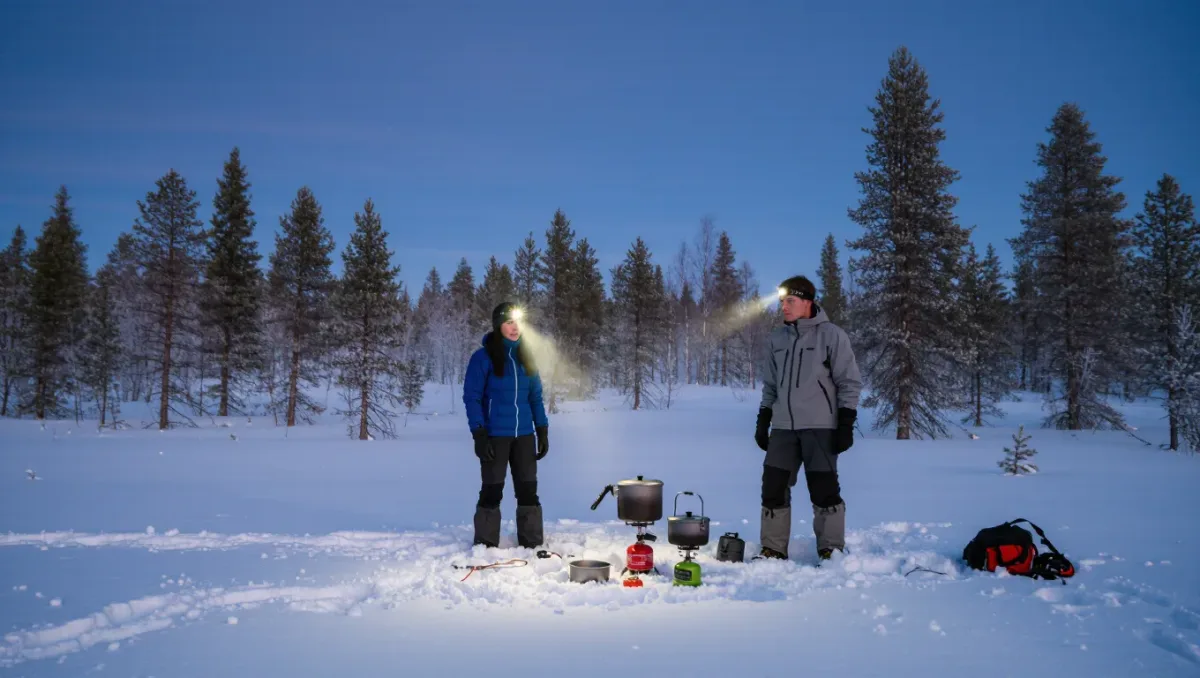
Winter turns Leave No Trace upside down: a deep snowpack can absorb your impact almost completely, but the vegetation, soils, and wildlife underneath it are more fragile than at any other time of year. The core rule is simple — camp on snow at least 8 to 12 inches deep, well away from exposed vegetation, and you can leave a busy winter site nearly invisible by spring. Get that one decision right and most of the rest of winter ethics falls into place.
This guide covers trip planning, camp selection, waste, and wildlife for snow camping in US mountains and northern forests. It is general information, not safety advice: conditions change, and avalanche terrain in particular demands training and a current forecast from your regional avalanche center before you go. Check with the managing agency — a national forest or park — about seasonal closures and road access before every winter trip, because many areas that stay open in summer are gated or restricted from December through April.
Why does winter need its own set of Leave No Trace rules?
Snow changes the math in both directions. A deep, persistent snowpack protects the ground so well that well-managed winter camping leaves almost no trace — the Leave No Trace organization's winter guidance notes that impacts on snow generally disappear when the snow melts. But the same snowpack compresses and kills exposed vegetation under just a few boot prints, and cold-blooded animals are living on greatly reduced energy budgets. A wintering deer or a denning bear forced to move burns calories it cannot easily replace. Winter rules therefore push you onto durable snow surfaces and pull you away from both vegetation and wildlife shelter.
How do you choose a low-impact winter campsite?
Plan ahead, then pick snow over everything else. Before you leave, study maps for slope angle — avoid anything steep enough to slide — and confirm legal access with the land manager. On the ground, follow this order of preference:
- Deep snow, 12 inches or more, at least 200 feet (about 70 adult steps) from lakes, streams, and any summer water source.
- Open meadows or lakes, only if you are certain the ice is thick enough for your party and gear — many agencies cite roughly 4 inches of clear, solid new ice as a minimum for one person on foot, and you should verify current guidance locally.
- Durable bare ground or rock, never vegetated ground, which suffers compaction damage all winter because recovery is dormant.
Keep your camp compact. Snow hides your footprint, so it is easy to spread a kitchen, tents, and a bathroom area across more ground than a summer group ever would. Pick a spot large enough for everything in one zone, and consolidate traffic routes between them.
Related stories: Why Cutting Switchbacks Damages Trails More Than You Think · How to Watch Wildlife Without Disturbing It: Distances, Tools, and Rules.
What about digging — shelters, kitchens, and snow walls?
Digging is where winter camping gets fun, and it is also fine: construction is permitted precisely because snow is temporary. Build kitchens on snow, trench wind walls, and excavate a group seating pit freely. Two habits keep it low-impact. First, kick in and collapse your shelters, walls, and furniture before you leave, both to restore the site and to keep it from tempting the next party into an unstable hollow. Second, keep every excavated snow pile inside your camp footprint so it settles in place.
How do you handle human waste when everything is frozen?
This is the decision winter trips get wrong most often. Snow does not make waste disappear — it merely delays the problem until spring melt, exactly when the water table rises. Follow the managing agency's rules first: some popular winter areas, including parts of several national parks that see heavy snow-camping use, require pack-out of human waste in wag bags. Where burial is permitted, dig through the snow down to mineral soil — not just into snow — dig a cathole 6 to 8 inches deep in that soil, and replace the snow cap when you finish. Pack out all toilet paper and hygiene products in a sealed bag. Snowmobile-access areas with outhouses at summer trailheads sometimes keep them plowed; a quick call to the ranger district settles it.
Do campfires belong on a snow trip?
Usually no. Wood is scarce, wet, and a wildlife resource in winter, fire rings scar lakeshores the moment the snow melts, and a fire built directly on snow sinks into a pit ringed with ash that surfaces in April. A liquid-fuel stove handles snow-melting for water faster than any fire anyway — budget the fuel, roughly one liter per person per day in subfreezing conditions for melting and cooking, and carry a backup. If a fire is locally legal and genuinely needed in an emergency, use dead and down wood, keep it small, and scatter the cold ash widely in spring conditions or pack it out.
How should winter wildlife etiquette differ?
Give animals a wider berth than you would in summer, because every flush costs them calories they are burning just to stay warm. Never approach or follow wintering deer, elk, moose, or mountain goats — forcing an animal to move is the impact, regardless of distance. Store all food, trash, and scented items secured from bears, which may be active in some regions in any month, and from ravens and coyotes, which learn quickly around winter camps. Bear-hang techniques change with snow depth: a canister, required in many popular areas, works the same as always. Check current food-storage orders with the local ranger district before you go.
What does a good winter-camping cleanup look like?
Leave the site looking like nobody was there — that is the whole test. Pack out every wrapper, fuse, and bit of food, including orange peels and shell scraps, which persist and attract animals. Dismantle snow structures, smooth the site, and take a final slow lap to catch micro-trash that has sunk into your boot tracks. Conditions, closures, and local rules all shift through the season — check with the managing agency before you go, and again the day you leave the trailhead.