
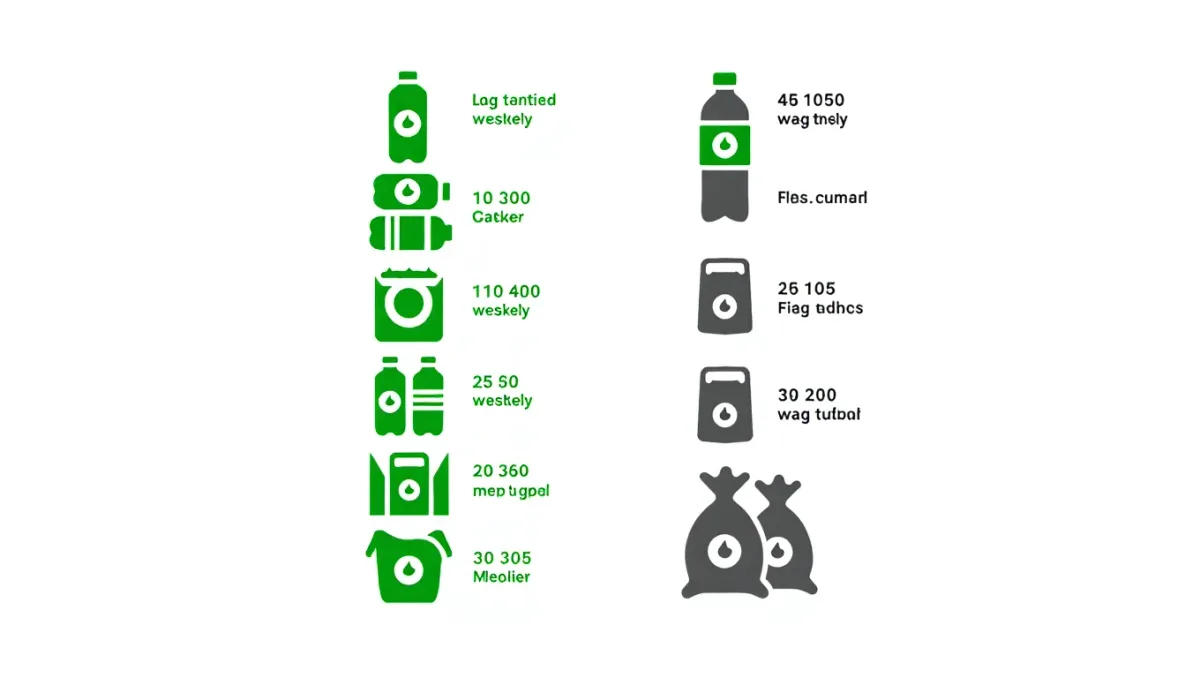
A typical long-distance hiker burning 4,000 or more calories a day goes through thousands of food calories — and a lot of packaging — between Mexico and Canada on the Pacific Crest Trail, where resupply stops arrive roughly every 4 to 7 days. The good news: the biggest plastic sources on a thru-hike are predictable, and swapping three of them — drink bottles, meal packaging, and resupply bags — removes the large majority of your trail trash without meaningfully changing your pack weight.
This is an explainer on waste reduction, not gear or nutrition advice; caloric and dietary needs vary by person, and you should plan food systems around your own health requirements. The agency backdrop matters too: national park and national forest regulations require you to pack out all trash, including food waste, on essentially every long trail in the United States — check the specific rules with each land manager along your route.
Where does a thru-hiker's plastic actually come from?
Three categories account for most of it. First, beverages: sport drinks and sodas in PET bottles bought at trail towns and small resort stores. Second, meal packaging: retort-pouch dinners, ramen sleeves, and individually wrapped snack bars — by count, wrappers outnumber everything else on a typical hiker's trash line. Third, resupply logistics: grocery bags, bubble mailers, and packing tape used to send boxes to themselves. Everything else — broken buckles, tape, sunscreen tubes — is real but marginal. Attacking the big three is the whole game.
What is the simplest swap for bottled drinks?
Stop buying them and treat your bottle as infrastructure. A durable 1-liter bottle — hard-sided or a collapsible pouch — is already standard backpacking kit; hikers who commit to refilling it from taps, filters, and powder mixes rather than buying drinks report eliminating the single most visible part of their trash. Powdered electrolyte mixes sold in multi-serving tubs, decanted into a small zip bag at home, replace dozens of individual bottles over a season. Trail-town cafés and grocery fountains fill bottles for free or a nominal charge — ask; most towns along the major US trails are used to it.
Related stories: How to Watch Wildlife Without Disturbing It: Distances, Tools, and Rules · Why Cutting Switchbacks Damages Trails More Than You Think.
How do you cut meal and snack wrapper waste?
Repackage at home, in bulk. This is the highest-leverage habit in trail food:
- Buy nuts, trail mix, dried fruit, and instant meals from bulk bins or large-format bags, then portion them into reusable zip bags you carry the whole hike.
- Make or buy bars in bulk and wrap them yourself in wax paper or reuse the same bags.
- Choose dinner ingredients — couscous, instant rice, dried lentils, powdered sauces — that come as dry goods rather than retort pouches; they pack lighter, too.
You will still generate some waste — zip bags themselves wear out, and towns resupply in plastic-wrapped reality. The realistic goal is cutting volume by most, not reaching zero. What you must never do is burn trash or bury it; both are prohibited and both fail in practice. Every wrapper goes into your trash bag and out with you.
Does a bear canister change any of this?
It helps. Hard-sided canisters, required on sections of several long trails including parts of the Pacific Crest Trail and John Muir Trail during bear-active season, have a fixed volume — hikers naturally shift to dense, minimally packaged food to fit more calories inside, which happens to be exactly the low-waste strategy. Check current canister requirements with each land manager before your hike; they change and are enforced by season and segment.
How do you make resupply boxes less wasteful?
Reuse the system, don't rebuild it. Hikers who send boxes to themselves at small resorts and post offices can dramatically cut waste with three habits: use one durable box or barrel sent repeatedly to the same stops; skip bubble mailers in favor of reusable sacks; and consolidate — fewer, fuller boxes beat many partial ones. Arrange with outfitters to keep your container between mailings. In towns, choose groceries with bulk sections and refill instead of single-serve everything.
What about water treatment and hygiene plastic?
Small swaps add up here. A filter with a long rated lifespan — many hollow-fiber models are rated for 1,000 liters or more by their manufacturers — replaces hundreds of chemical-treatment sachets or disposable cartridges. Solid bar soap in a small tin replaces pump bottles. A spoon you already own replaces the throwaway kind that accumulates in hiker boxes. None of it is sacrifice; all of it is lighter over a full season.
What is the realistic baseline for a low-waste thru-hike?
Hikers running the system above — refilled bottles, bulk-repackaged food, reusable resupply containers, long-life filter — report trash volumes measured in a couple of small sacks over hundreds of miles instead of a trash bag per resupply cycle. The habits cost an hour of prep per resupply and pay back in pack weight, town budgets, and what you leave at the mailbox. Conditions and rules change along every corridor — check with the managing agencies on your route before you go.