
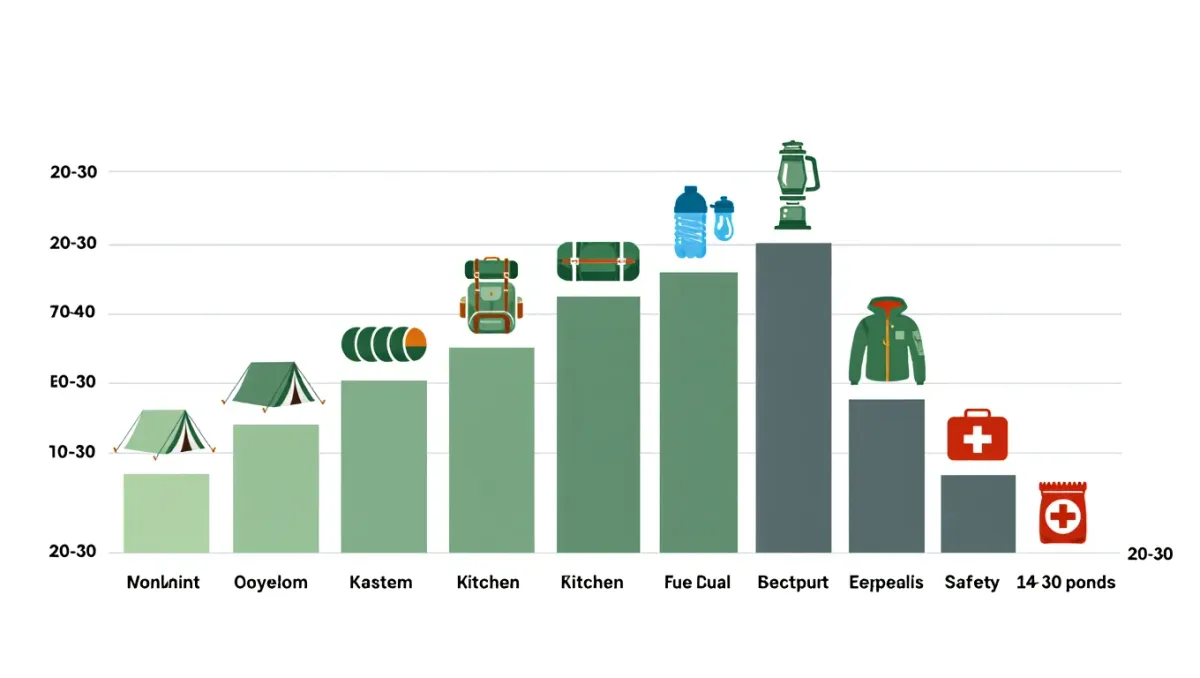
A sensible first overnight pack — pack, shelter, sleep system, stove, food, water treatment, and the Ten Essentials — lands in the 20 to 30 pound (9 to 14 kg) range with consumables for a mild three-season night, and that number is the easiest health check in trip planning: much under 20 usually means something safety-relevant is missing, much over 35 means something recreational came along. Work the list below in order, weigh as you pack, and your first trip will feel like hiking rather than hauling.
This checklist is a starting template for warm-season trips in US backcountry, not a prescription: weather, terrain, and local rules change everything — some areas legally require bear canisters, some routes require specific gear — so confirm requirements with the managing agency before you go.
What are the big three items to get right?
Shelter, sleep system, and pack — they dominate both weight and comfort. A two-person tent split between two hikers runs 2.5 to 4.5 pounds; a solo shelter, similar or less. A sleeping bag rated to about 20-30 degrees Fahrenheit covers three-season use in most US ranges, paired with a sleeping pad whose insulating value — the R-value on the spec sheet — matters as much as the bag on cold ground. The pack comes last, sized to 50-65 liters for overnight-to-three-day loads; buy it after the other gear so it fits the load, not the other way around.
What goes on the kitchen and water list?
Small, and easy to overdo. The working minimum: a canister stove or similar, one pot, a spork, a lighter plus backup matches, and enough fuel for your boils — roughly one small 230 g canister covers four to six days of two-boil cooking for a pair, per typical manufacturer yield figures. Water: a filter or purifier rated for your source quality, bottles or a reservoir to carry at least 2 liters, and the discipline to treat everything from every source, no exceptions. Skip the camp chairs, the cast iron, and the second knife — they are the classic first-trip regrets.
Related stories: How to Plan Water Resupply on a Long-Distance Hike · How to Plan a Hiking Trip Without a Car: Transit, Shuttles, and Timing.
What are the Ten Essentials, exactly?
The category system land agencies publish for backcountry safety, and it works as a final-packing audit: navigation (map and compass, plus a phone with offline maps as backup), sun protection, insulation beyond what you hike in, a headlamp with spare batteries, a first-aid kit, a fire starter, a repair kit with knife, extra food beyond your menu, extra water and treatment capacity, and emergency shelter if your night shelter is not carried on every day hike. The National Park Service publishes the framework — audit your pack against it the night before, not at the trailhead.
What clothing should a first-timer bring?
Layers, not outfits, and no cotton. The three-season working set: a synthetic or wool base layer, a fleece or insulated mid-layer, a rain shell with real waterproof rating, a warm hat and sun hat, plus hiking socks with one spare pair. You hike in one configuration and sleep in dry spares; everything else stays in the bag. Footwear: broken-in trail shoes or boots — new boots on a first trip is how blisters happen — and gaiters if the route is muddy or snowy. If evenings turn cold, the answer is putting everything on at once, not packing a wardrobe.
What should you deliberately leave at home?
Everything you cannot name a use for per day of the trip. Common cuts: more than one spare outfit, camp shoes, full-size toiletries, books, and duplicate tools. Do the pack-weigh the night before and remove anything you packed out of anxiety rather than a plan. The one thing never to cut: required safety equipment — maps, insulation, headlamp, first aid, and the bear canister where the land manager requires one.
How do you keep the weight honest?
Weigh, then divide. A luggage scale or bathroom scale handles both: weigh the packed bag total, and weigh consumables separately — food at roughly 1.5 to 2 pounds per person per day, water at about 2 pounds per liter. Consumables are the part that scales with trip length and party size, so a two-night trip with a partner shares stove, fuel, first-aid kit, and tent. Split the group gear on the spreadsheet, not at the trailhead.
What is the bottom line for a first overnight?
Pack the big three, the kitchen minimums, the clothing set, and the Ten Essentials; weigh the bag; aim for 20 to 30 pounds including food and water; and verify area-specific requirements — canisters, fire rules, campsite rules — with the managing agency before you leave. The list is boring by design. Boring is what a first trip should feel like at the top of the climb.