
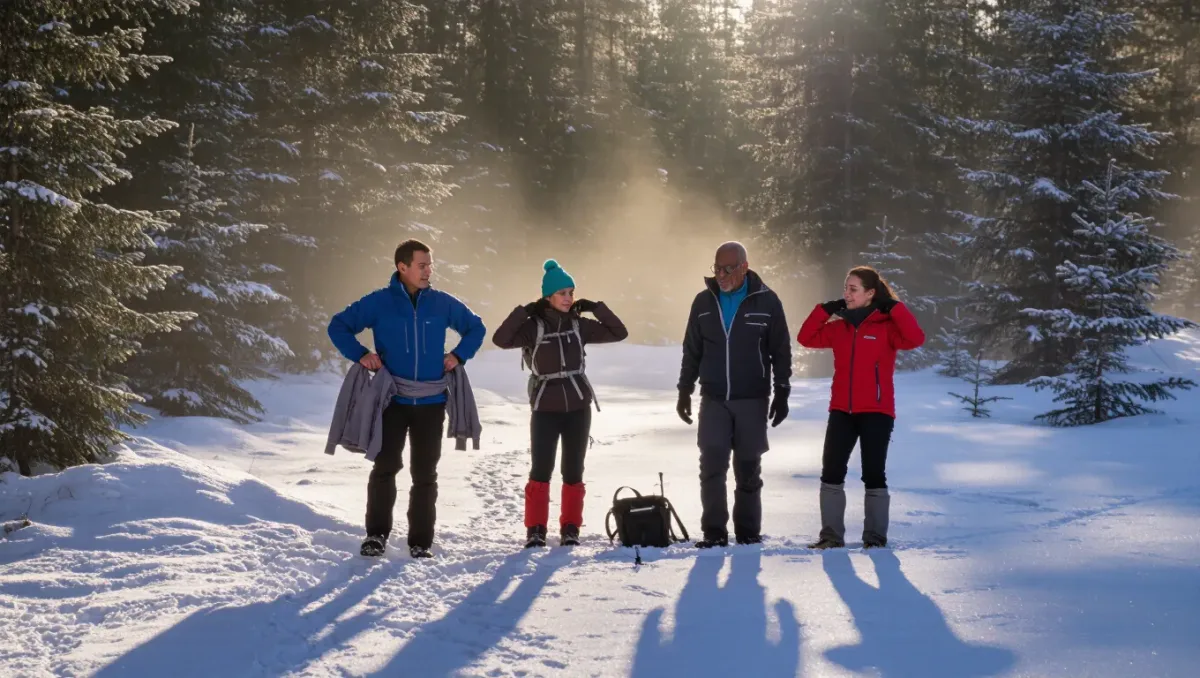
Layering for a winter day hike means three jobs handled by three layers: a wicking base against the skin, an insulating midlayer on top of it, and a wind-and-precipitation shell over both — with the whole system adjusted at every stop so you never sweat through it, because moisture is what kills insulation in the cold, per the cold-weather clothing guidance published by the major outdoor manufacturers and the winter-safety advisories of land agencies such as the U.S. Forest Service. For most winter hikers that translates to a synthetic or merino base, a fleece or insulated jacket, and a waterproof-breathable shell, plus the accessories — hat, gloves, insulated boots — that the head-and-extremities math demands.
This guide walks through each layer with the specifications manufacturers publish, the adjustment habits guides teach, and the packing list that covers a forecast gone wrong. It publishes information, not safety certification; cold-weather competence ultimately comes from practice in conditions you can bail from.
Why is sweating the enemy in winter?
Because wet fabric conducts heat away from your body many times faster than dry, and on a winter trail the moisture has nowhere to go. Hike hard in a big parka and you soak your base layer; stop for lunch and that damp layer flashes your heat away within minutes. The discipline every manufacturer's cold-weather guidance repeats is simple: start the hike slightly cold, vent before you overheat, and shed layers at the first sign of sweat. The habit matters more than the price tag on any single garment.
What should the base layer do?
Move moisture off your skin, and nothing else. Manufacturer spec sheets sort base layers into two honest camps: merino wool, which insulates decently when damp and resists odor, and synthetics such as polyester blends, which dry faster and cost less per gram. Both work; cotton works against you — it holds water next to skin, which is why safety agencies have campaigned against cotton in cold conditions for decades. Fit matters as much as fabric: a snug base layer needs skin contact to wick. For a winter day hike in the 20s and 30s Fahrenheit, a midweight base on top and bottom covers most hikers; heavy expedition weights are for standing around, not moving.
How do you choose a midlayer?
By loft, weight, and how it handles moisture. Fleece jackets breathe hard, insulate when damp, and dry fast — the working choice for high-output days. Synthetic insulated jackets (spec sheets list fill weights in grams) insulate more per ounce and survive a soaking better than down, which loses its loft when wet, per every major maker's own care guidance. Down remains the warmest thing per ounce and earns its place for lunch stops and summit huddles — packed in the pack until needed. A common winter-day system: fleece for the moving hours, a synthetic or down puffy pulled over it the instant you stop.
| Layer | Best materials | Job | When to adjust |
|---|---|---|---|
| Base | Merino or synthetic, snug fit | Wick sweat off skin | Rarely — this layer stays |
| Mid | Fleece or synthetic fill | Trap warm air while moving | Vent at first sweat; shed on climbs |
| Insulated puffy | Down or synthetic fill | Warmth at stops | Throw on within a minute of halting |
| Shell | Waterproof-breathable laminate | Block wind, rain, snow | On for wind/storm; off when clammy |
Related stories: Hiking in Extreme Heat: How to Stay Safe Above 90 Degrees · How to Make Backcountry Water Safe to Drink: Filters, Chemicals, and Boiling.
What does the shell need to do?
Two things: block wind, which steals heat through every other layer, and stop snow and rain from wetting the system. Manufacturers' shell spec sheets center on a waterproof-breathable membrane with a durable water repellent finish, pit zips for venting, and a helmet-compatible or layering-friendly hood. A hard shell is the safe default for winter; soft shells trade weather protection for breathability and suit cold, dry climates. Remember that waterproof-breathable fabric breathes only while the DWR is working — reproof per the manufacturer's care instructions, because a soaked-out shell jacket traps your vapor inside and does the sweating enemy's work for it.
What about hands, feet, and head?
The extremities run the comfort budget. Manufacturer cold-weather guidance and land agencies' winter safety pages converge on the same list: a wicking beanie or headband, a liner-plus-insulated mitt system for hands (mitts beat gloves for warmth; liners let you work clasps without baring skin), and insulated waterproof boots a half size up from summer fit to leave room for a warm, dry sock plus a lightweight liner sock if you run cold. Gaiters keep snow out of boot tops, and traction devices for ice belong in the pack whenever the forecast or the trail report mentions freeze — black ice is the winter trail's most common injury source, per agency incident summaries.
Adjust early, adjust often: the hiker who sheds a layer at the first warmth arrives dry, and the dry hiker is the warm hiker. Conditions change — check the forecast and trail reports before you go.
What belongs in the winter day-pack on top of what you wear?
The insulation you are not wearing plus the ten essentials with winter margins: a puffy sized for a long forced stop, a spare base layer, extra gloves and hat, a headlamp with spare batteries (batteries fade in cold — keep them warm), a sit pad, a thermos of hot drink, more food than the plan needs, and a foil bivy or emergency shelter, per standard winter day-hike checklists published by land agencies. Add traction devices and, in avalanche-forecast terrain, the training, transceiver, probe, and shovel that the managing agency's advisories require — or choose terrain without avalanche exposure, which is the correct winter day-hike default for anyone still learning.
Frequently asked questions
Is merino or synthetic better for a winter base layer?
Both work. Merino insulates better when damp and resists odor; synthetic dries faster and costs less, per manufacturer spec comparisons. Pick on fit and budget — the layer only fails when it is cotton or loose.
How many layers should you actually wear while hiking?
Most winter hikers move in two: base plus a breathable midlayer, with the puffy and shell in the pack. If you start the hike feeling fully warm, you are overdressed and will sweat; the correct start is cool.
Do you need a heavy parka for a day hike?
Not while moving — a light-to-mid puffy pulled over your midlayer covers stops. A heavy parka earns its place in the pack for high wind, subzero forecasts, or trips where a forced overnight is conceivable.