
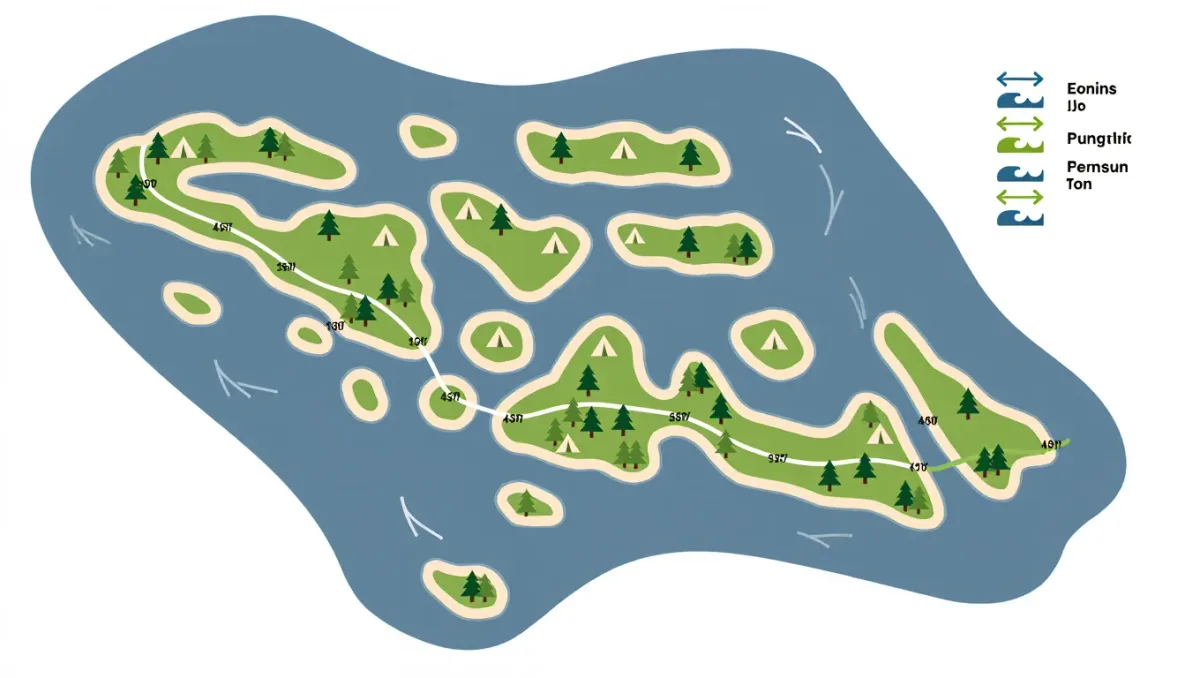
Sea kayaking the Apostle Islands means paddling a cold, big-water archipelago: the 21 islands of Apostle Islands National Lakeshore sit offshore from Bayfield, Wisconsin, in Lake Superior, where the National Park Service requires camping permits reserved in advance for island campsites and bluntly warns paddlers that Superior's water temperatures, sudden wind shifts, and fog demand genuine sea-kayak equipment and skills — boats with sealed bulkheads, immersion protection, and the judgment to stay ashore when the forecast turns. The famous sandstone sea caves on Sand Island and Devil's Island are the headline destination, reached by open-water crossings measured in miles, not pond paddles.
This guide covers how the permit and campsite system works, what gear the water demands, how to route a first trip, and when to charter a guide instead. It publishes information, not a safety clearance: Lake Superior regularly injures and kills experienced paddlers who misjudged it, and the managing agency's own advisories are the authority for any go/no-go decision.
Do you need a permit to camp and paddle the Apostles?
Yes for camping: overnight stays at the National Lakeshore's designated island campsites require a permit through the park's reservation system, booked ahead of your dates, per National Park Service camping information as of 2025. Day paddling needs no permit, but the logistics still bite — launches at Little Sand Bay and other access points fill on summer weekends, and park regulations cover where you may land and camp on each island. Group size limits apply, and some islands have closures to protect nesting birds or fragile zones in some seasons, so read the park's current Superintendent's Compendium and alerts before finalizing a route.
Why does Lake Superior demand real sea-kayak gear?
Because the lake behaves like a cold, shallow sea. Surface temperatures at the islands often stay in the 50s Fahrenheit even in July, cold enough that an accidental swim becomes a hypothermia emergency within minutes, which is why the National Park Service's paddling guidance calls for wetsuits or drysuits through the season. The water is also big enough to build serious waves — open crossings of three to seven miles between islands can go from glass to steep chop in an hour when the wind pipes up, and fog can close visibility without much warning. The equipment list that follows from those facts is standard: a true sea kayak with front and rear bulkheads, a spray skirt, a paddle float and pump, flares or a VHF radio where licensed, and the rescue skills to use all of it — skills the park expects solo and group paddlers to hold.
| Fact | Detail (per NPS, as of 2025) |
|---|---|
| Islands | 21 islands in Apostle Islands National Lakeshore |
| Camping permit | Required for island campsites; reserved in advance |
| Water | Lake Superior; often 50s°F midsummer, immersion protection advised |
| Headline destinations | Sand Island and Devil's Island sea caves; lighthouses on several islands |
| Base town | Bayfield, Wisconsin; launches at Little Sand Bay and area landings |
| Classic first trips | Base-camp paddling around Sand and Oak islands; longer point-to-point routes for strong paddlers |
What is a realistic first-trip route?
Most outfitters and the park's own guidance steer first-timers to the Sand Island area: launch from Little Sand Bay, make the roughly two-and-a-half-mile crossing to Sand Island, and camp at a reserved site while day-paddling the island's western shoreline sea caves in morning-calm conditions. Oak Island's sandy beaches and Hungry Bay's protected paddling give nearby fallbacks when the wind rises. The Devil's Island caves sit across a longer, more exposed stretch to the northeast and belong on a second trip with weather windows and paddlers who have already proven themselves in wind. Long point-to-point routes — mainland to Stockton, island chains in a week — are rewarding and entirely dependent on holding the flexible itinerary that big-water paddling requires.
Related stories: What to Know Before You Hike to Havasu Falls · What to Know Before You Hike to The Wave in Coyote Buttes North.
Should you hire a guide or go solo?
Unless your group holds real sea-kayak resumes — rescue training, rough-water hours, navigation — book with one of the Bayfield-area licensed outfitters, who run guided cave trips and multi-day island tours with the route judgment that Superior demands. The cost buys more than leadership: outfitters track the marine forecast, know the crossing windows, and carry the group safety kit. Self-organized trips are legitimate and common, but the honest minimum is a group whose members have practiced assisted rescues in water cold enough to matter — a pool session does not count — plus filed float plans and a satellite communicator, given the thin phone coverage among the islands.
When is the season, and how do you plan around weather?
The practical season runs from late May through September, with July and August offering the warmest air and the longest calm-morning stretches; the pattern that governs everything is the afternoon wind, which builds most days and makes mornings the crossing window, per the paddling guidance the park publishes. Plan routes that move with the light: on the water by dawn, campsites reached by early afternoon, afternoons reserved for hiking and lighthouse visits. Check the marine forecast each evening, and treat a building northeast blow as a rest-day order, not a suggestion — the islands' north and east shorelines offer little shelter when waves stack onto the sandstone.
Lake Superior conditions change by the hour — check the marine forecast and the park's current alerts every morning of your trip before launching.
Trip facts
- Area: Apostle Islands National Lakeshore, Lake Superior, near Bayfield, Wisconsin
- Scale: 21 islands; inter-island crossings from roughly 2.5 to 7 miles (per NPS maps and route descriptions)
- Difficulty: exposed big-water sea kayaking; difficulty rests on wind, waves, and cold water rather than technical paddling
- Permit: island camping requires advance reservation through the park's system (current as of 2025); day paddling no permit
- Season: late May-September; mornings are the crossing window
- Managing agency: National Park Service, Apostle Islands National Lakeshore
- Conditions change — check the marine forecast and park alerts before you go
Frequently asked questions
Can you paddle the sea caves without experience?
Not on your own — the caves sit on exposed shorelines reached by open-water crossings, and the National Park Service's guidance assumes sea-kayak skills and equipment. The standard path for newcomers is a licensed Bayfield outfitter's guided trip, which handles route choice and safety for the day.
How cold is the water in summer?
Surface temperatures at the islands commonly hold in the 50s Fahrenheit even in July, per the park's paddling advisories — cold enough that the guidance calls for wetsuit or drysuit immersion protection all season, because a swim turns hypothermic in minutes.
Do you need reservations to camp on the islands?
Yes — island campsites in the national lakeshore require permits reserved in advance through the park's system, per NPS camping rules as of 2025. Reserve early for July and August weekends, and confirm any seasonal island closures when you book.
What boat do you need?
A true sea kayak with sealed bulkheads front and rear, a spray skirt, and full safety kit, per the park's paddling guidance — recreational sit-on-tops and open boats are not adequate for Superior's conditions and crossings, whatever the air temperature suggests on a calm morning.