
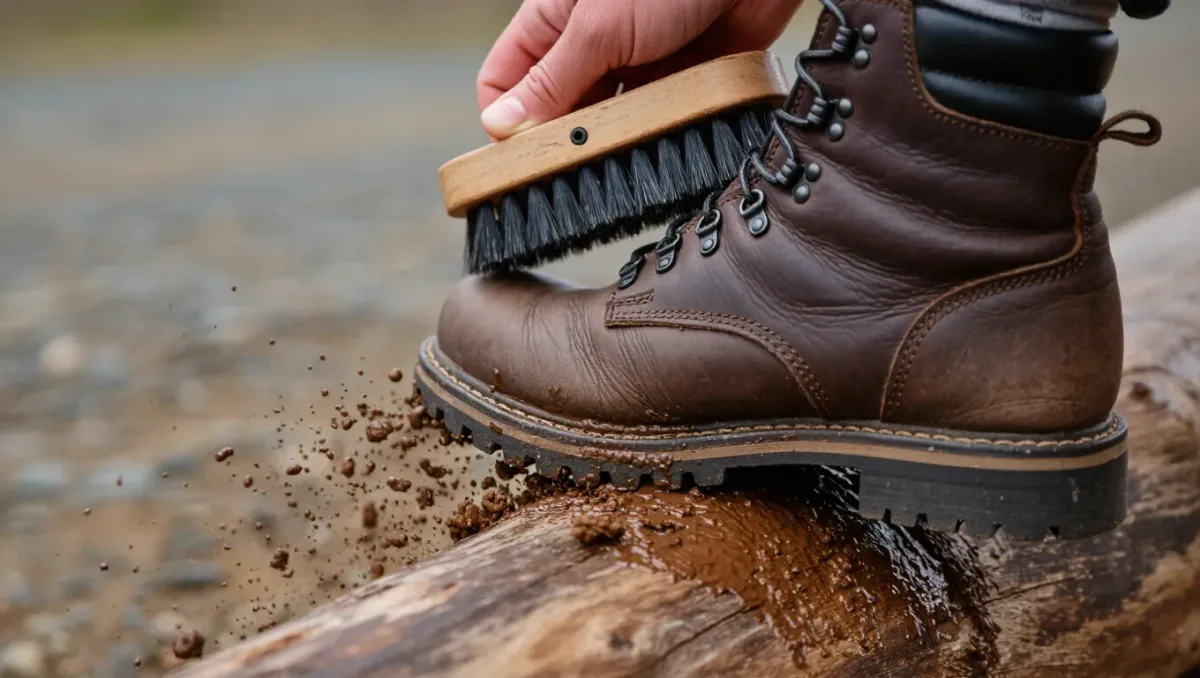
A muddy boot tread is a seed dispersal machine: studies summarized by USDA land-management agencies have found that outdoor recreation gear — boot soles above all — routinely carries viable invasive plant seeds, and hikers moving between regions can transport them hundreds of miles in the packed mud of a lug sole. The defense costs two minutes and a brush: knock off the chunky mud, scrub the tread, and pick out embedded debris before you drive to the next trail system. Do it at the end of a trip, not the start of one, and you break the chain.
This guide covers what rides on boots and gear, where the risk is highest, and how to clean properly. Cleaning recommendations vary by land manager — some watersheds and protected areas publish their own gear-cleaning requirements — so check with the managing agency for the areas you plan to hike.
What exactly travels on a hiking boot?
Three things: seeds, plant fragments, and pathogens. Seeds of invasive plants such as cheatgrass, garlic mustard, and knapweed lodge in lugs, welts, and laces. Fragments of invasive plants — a bit of root or stem in a mud ball — can establish from tiny pieces in some species. Pathogens and water-borne invaders matter for anything wet: felt-soled wading boots, for example, were banned in several US states precisely because felt holds and transfers aquatic invasive species like didymo and whirling-disease parasites between watersheds. Boot laces, gaiters, trekking pole baskets, and dog coats complete the checklist.
Where is the risk highest?
Anywhere mud sticks, and anywhere you cross from infested to clean ground. The highest-stakes movements are: between regions (a different state or island ecosystem); from trailhead parking lots and staging areas, which are already weed epicenters where vehicles and dogs concentrate seed; through livestock grazing areas; and into protected or restored sites, where a new invader can undo years of management. Spring and late fall are peak seasons — wet soil clings, and many invasive plants seed precisely in those windows.
Related stories: How to Cut Single-Use Plastic on a Long-Distance Hike · How to Practice Leave No Trace on Winter Snow Camping Trips.
How do you clean boots properly?
Do it thoroughly, dry, and on site:
- At the trailhead or camp, before you leave: knock soles together and pull out embedded gravel, twigs, and root fragments with a stick.
- Scrub the tread, welt, and upper with a stiff brush — a dedicated one kept in the car — until no visible soil remains. Mud is the carrier; remove the mud, remove the seed.
- Rinse if water is available and allowed, then let boots dry fully before the next trip; drying kills many soft-bodied pests and makes remaining seeds easy to brush off.
- Repeat for laces, gaiters, pole baskets, and tent stakes — anything that touched soil.
For aquatic gear — waders, wading boots, kayak gear — follow the agency standard for the water you left: clean, drain, and dry, with some waters requiring specific drying times or hot-water treatment.
Do trailhead boot-brush stations actually work?
They help, when used before entry. Many land agencies and conservation areas have installed boot-brush stations at trailheads precisely because mechanical cleaning measurably reduces seed transport — the stations are typically posted with instructions and sometimes with the target species pictured. Use them on the way in as well as the way out; the point is to arrive clean, not only to leave clean. If your home trailhead lacks one, a brush in the trunk is the portable version.
Isn't this overkill for an ordinary weekend hiker?
Consider the economics. Invasive plants cost US agriculture and land management billions of dollars annually per USDA estimates, and once an infestation establishes, control runs to herbicide, crews, and years — versus two minutes with a brush per trip. Seed dispersal is a volume game: a few thousand hikers a season on one trail system, each carrying a few seeds, is how garlic mustard reaches a new watershed. The habit costs nothing and scales.
What is the take-home routine?
Arrive clean, leave clean, dry everything. Brush boots and gear before you enter a new trail system, pick your campsites and lunch spots with mud in mind, and check the managing agency's cleaning requirements for sensitive areas before you go — some watersheds publish exactly this. Two minutes at the trailhead is the whole program.