
The avalanche basics that matter to winter hikers fit in one discipline: check the avalanche forecast for your terrain every time, know that the five-level North American danger scale — Low, Moderate, Considerable, High, Extreme — published by the U.S. avalanche centers describes where avalanches will happen today, and carry transceiver, probe, and shovel only if you have practiced companion rescue with them, because the U.S. avalanche centers' accident research consistently finds that victims or their own parties trigger most burials. For most day hikers the honest conclusion is terrain choice: winter routes that stay out of avalanche paths make the whole problem manageable.
This guide explains the forecast, the terrain signs, the gear, and the training sequence in plain terms. It publishes information, not a substitute for an avalanche course — no article is, and every avalanche center and forecasting program says so directly.
What is an avalanche forecast, and how do you use it?
A regional avalanche forecast, published daily through the winter by avalanche centers coordinated at avalanche.org, distills snowpack observations into a danger rating on the five-level North American scale plus plain-language notes on which elevations and aspects carry the problem. The rating is a terrain tool, not a weather report: a Considerable rating means human-triggered avalanches are likely on steeper slopes in the described areas, per the scale's own definitions. The habit that keeps day hikers alive is checking the forecast the night before and again at the trailhead, then matching route choice to it — including the terrain below you, because runout zones reach far down valley floors that feel safe.
What terrain should winter hikers avoid?
Slopes steeper than about 30 degrees are where slab avalanches release, per the training standards used across North American avalanche education — a pitch steep enough that it reads as “steep” on skis and deceptively gentle on foot. The companion hazards matter as much: the runout zone below any steep slope, gullies and creek beds that funnel debris, and terrain traps such as tree wells and road cuts that deepen a burial. Wind-loaded leeward slopes, convex rollovers, and slopes under fresh wind slabs complete the classic list from every avalanche center's education pages. A winter hiker who stays on low-angle forested routes well away from anything steep overhead has removed the hazard class entirely — which is why agencies publish lists of exactly such winter-safe trails.
What gear do you need, and what is it for?
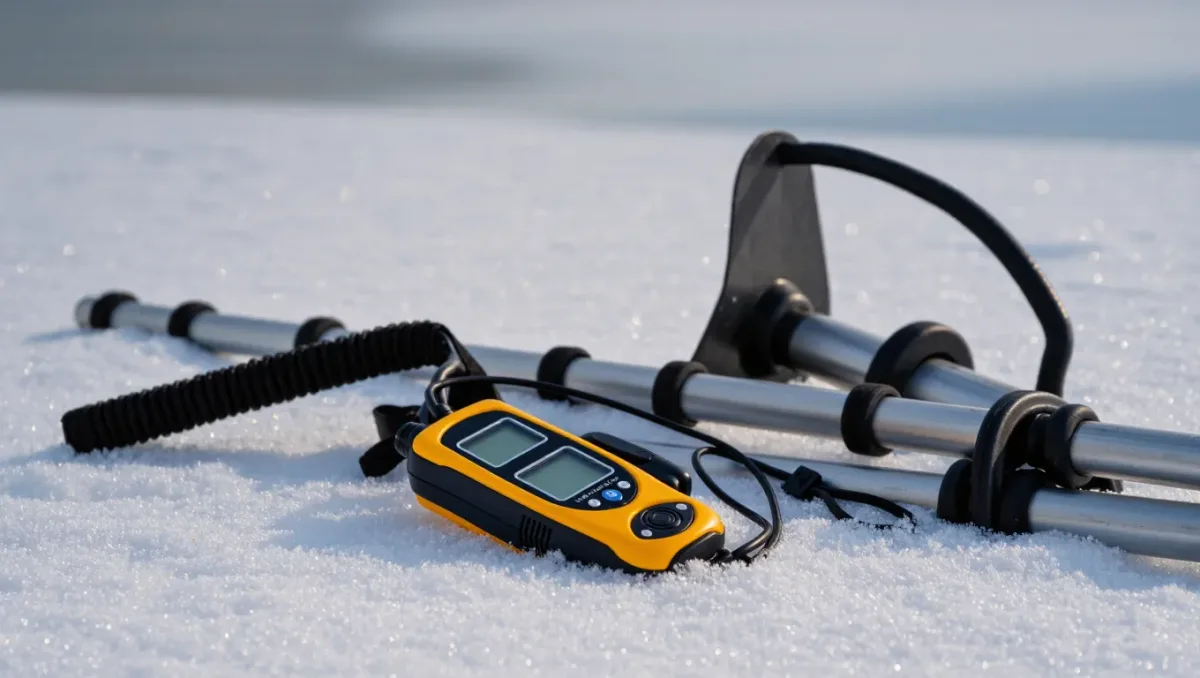
Three items form the companion-rescue set: a transceiver (beacon) worn on the body, a probe, and a metal shovel — a set that only functions as a team practice system, not a personal safety charm. The transceiver transmits and searches; the probe pinpoints a buried subject's depth; the shovel digs, and digging is the slow, brutal part, which is why modern courses drill efficient digging technique per the curriculum published by avalanche education providers. Snowshoers and skiers both carry the same set. The gear has no solo use: if you travel alone into avalanche terrain, none of it can dig you out, which is the single most important sentence in this article.
| Danger level | What the scale says | Plain-language travel advice |
|---|---|---|
| 1 Low | Avalanches unlikely | Generally safe, watch isolated steep slopes |
| 2 Moderate | Human triggering possible on specific slopes | Use caution on listed terrain |
| 3 Considerable | Human triggering likely | Careful route choice, avoid listed slopes |
| 4 High | Natural and human avalanches likely | Avoid avalanche terrain entirely |
| 5 Extreme | Widespread natural avalanches | Stay out of the forecast area's terrain |
Related stories: How to Layer for Winter Day Hikes: A Three-Layer System That Works · Trail Right of Way Rules: Who Yields to Whom on Shared Trails.
What training should you actually take?
A field-based avalanche course is the entry ticket, and the sequence most programs publish runs: an awareness evening or online module, then a multi-day field course covering snowpack, terrain, rescue, and decision-making, then seasons of mentored practice. The U.S. avalanche centers' education pages and their recognized course providers publish the curriculum standards; what no provider promises is that a certificate makes anyone safe — the consistent message from forecasters' accident reviews is that decision-making, not gear or technique, decides outcomes. Budget the practice time accordingly: a rescue drill every season with your actual partners, in realistic snow, is the maintenance interval the training community recommends.
Avalanche conditions change daily, sometimes hourly — read the current forecast at avalanche-region centers and check with the managing land agency before every winter trip into or below steep terrain.
How do most winter hikers get into trouble?
By accident of geography rather than ambition: hikers on a low-angle trail cross a runout zone, or climb a viewpoint slope they did not register as avalanche terrain, during exactly the window when the forecast flagged the problem. The countermeasures are unglamorous — read the forecast's aspect and elevation notes, time trips after storms settle the snowpack, stay off and out from under listed terrain, and travel one at a time anywhere the slope question is unresolved, per the standard travel protocols taught in every field course. Groups spread out; nobody crowds the debris path below a partner.
Frequently asked questions
Do flat-trail hikers need to care about avalanches?
Yes, but only in one specific way: runout zones. Trails that cross the fan below steep slopes can be in an avalanche's path even though the trail itself is flat, and the forecast plus posted winter closures — some land agencies close such trails outright — is what manages that exposure.
Is the avalanche danger scale about avalanches happening or about people triggering them?
Both, with the wording spelled out per level on the North American scale published by the avalanche centers: lower levels describe possible human triggering on specific terrain, while the top levels describe likely natural avalanches. Read the aspect and elevation notes under the rating, which say where.
Can you dig yourself out if buried?
No — a buried person cannot dig out of compacted avalanche debris, which is why the transceiver-probe-shovel set is a companion-rescue system. It works only with a trained partner present, which is also the argument against traveling alone in avalanche terrain.
How long is avalanche season?
As long as steep snow persists — the avalanche centers in most western regions publish forecasts from late autumn into spring, and spring wet-snow avalanches are a distinct hazard class on warming days. Check your regional center's forecast calendar, which varies by state.